
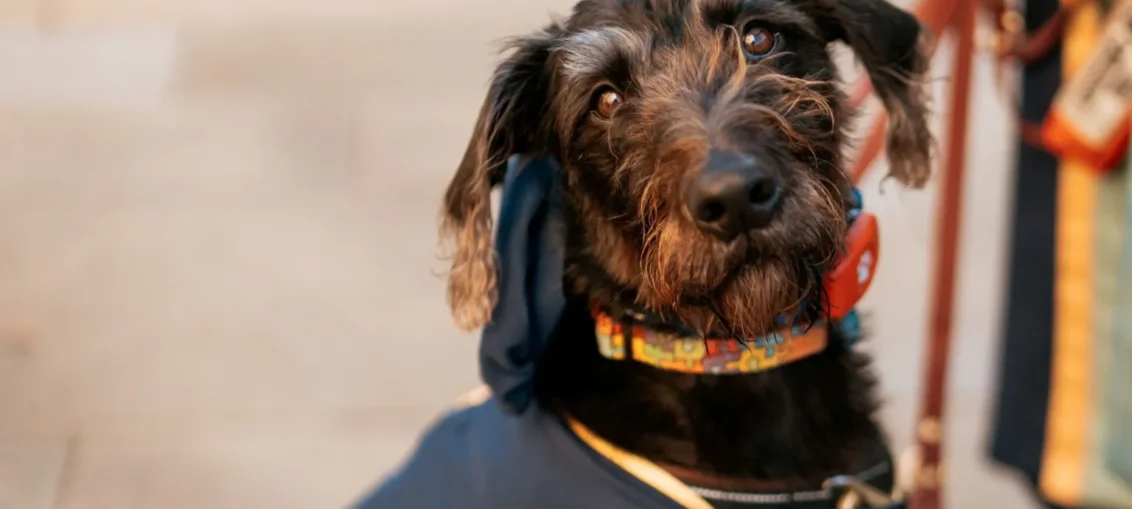
An unlikely graduate has taken centre stage at York St John’s graduation ceremony, as assistance dog McGee has received a special degree of his own.
An assistance dog has been awarded his very own ‘Dogtor of Education’ certificate by York St John University after supporting his owner throughout her doctoral studies.
McGee, a black Lurcher, joined Jan Hanson at her graduation ceremony at York Minster on Friday, where the pair celebrated their achievements in matching academic gowns.
While Jan received her doctorate, McGee was presented with a special certificate recognising his contribution to her academic journey.
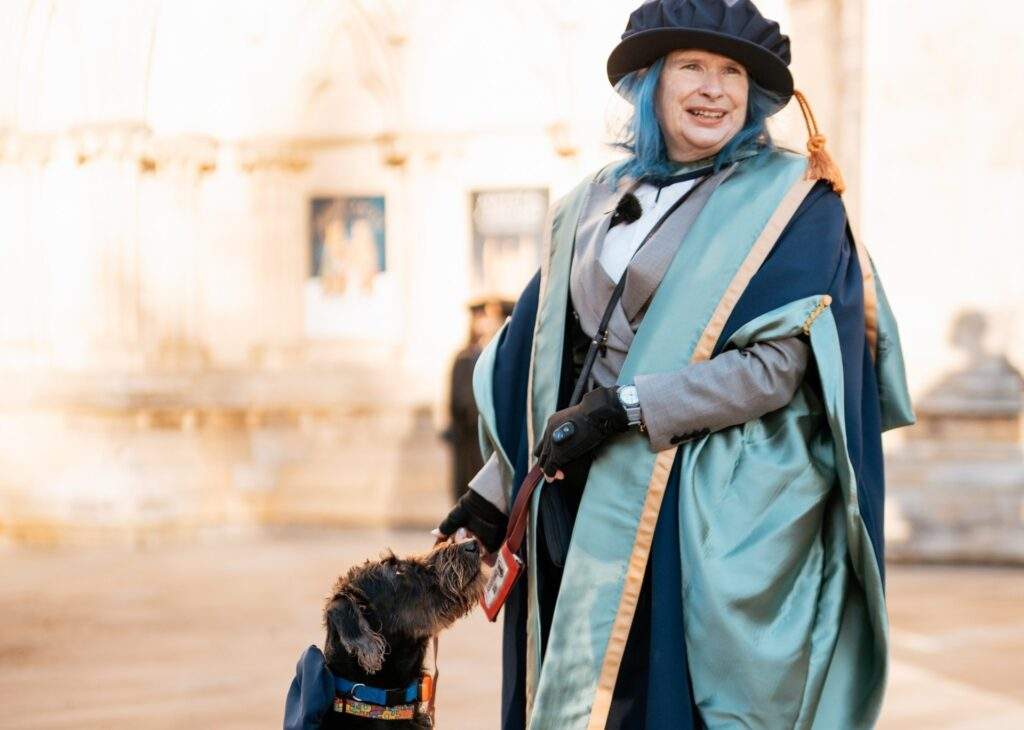
A paw-sitive influence
McGee has remained faithfully by Jan’s side throughout her doctoral studies, accompanying her conferences, supervision meetings and writing retreats.
As an assistance dog, he has supported Jan, who has autism, ADHD and a hearing impairment, helping her navigate crowded spaces and alerting her to sounds she might otherwise miss.
Speaking about his contribution, Jan said: “McGee is my colleague and my friend, and his practical and emotional support has been invaluable throughout my doctoral journey.”
The idea of awarding McGee his own certificate initially came as a surprise to Jan, who thought the university’s Postgraduate Research School was joking when they first suggested it.
“I thought the PGR school were joking when they said that McGee should have one [a degree] because of him supporting me all the way through my doctorate journey,” she said.
However, after completing her doctorate in the summer, Jan emailed the university to ask whether the offer was genuine.
It seems the university was not simply throwing him a bone, confirming that McGee would receive his very own ‘Dogtor of Education’ in recognition of McGee’s support.
More than a helping paw
Alongside her doctoral studies, Jan’s research explored how universities and employers could better support neurodivergent graduates as they transition from education into employment.
Having spent more than nine years supporting neurodivergent students and employees, Jan wanted to understand what happens when students graduate and the support they have relied upon comes to an end.
Her own experiences also shaped her research, having received diagnoses of dyslexia and dyspraxia at 30, autism at 56 and ADHD during her doctoral studies.
Jan said York St John’s inclusive approach helped her feel welcome and valued, with McGee accepted as a natural part of university life.
She described his companionship as something that made completing her doctorate possible, adding that without his support, the journey would have been “very difficult”.
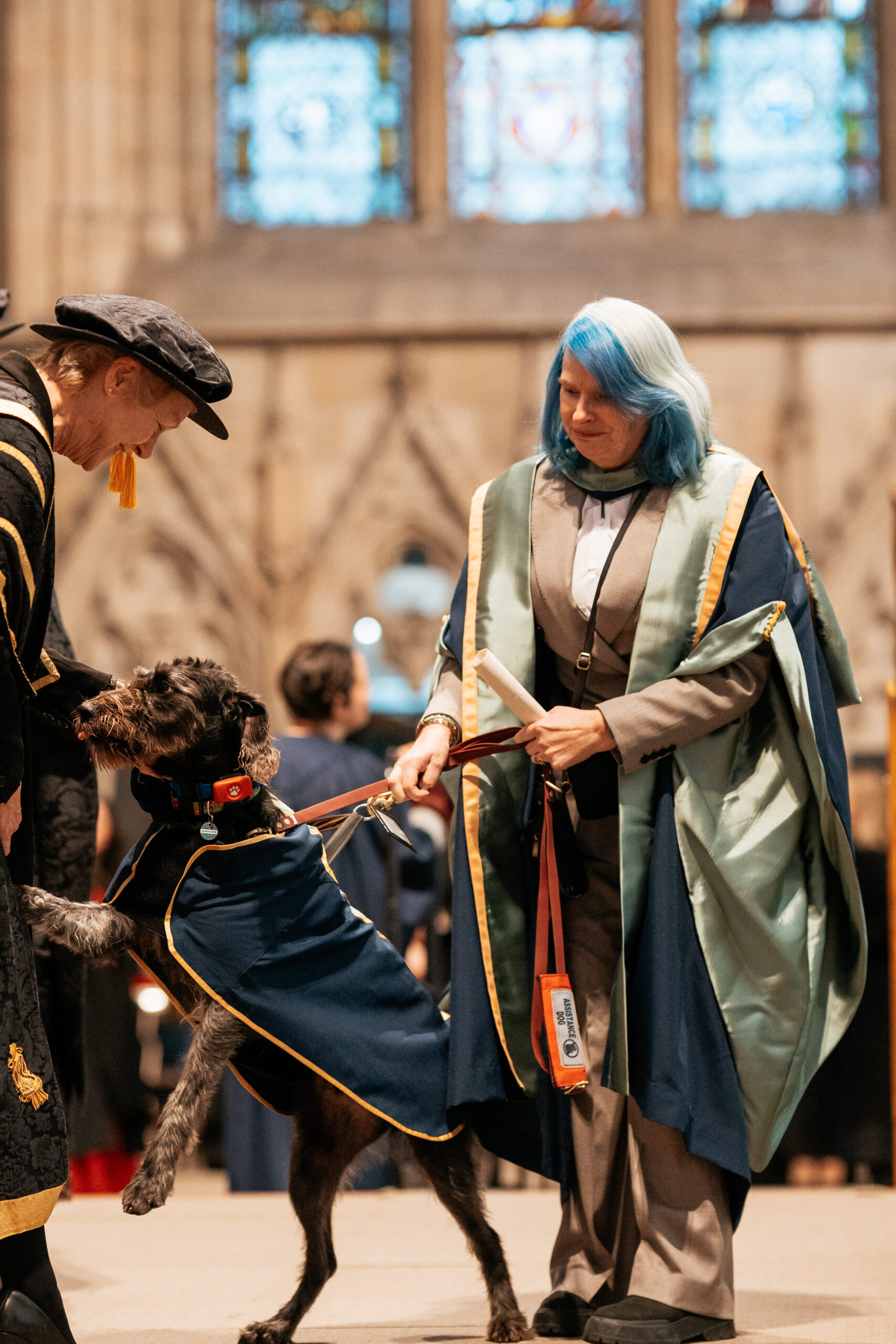
Photo: York St John University.
A degree above the rest
Jan was quick to recognise the support of her supervisors, the university’s Postgraduate Research School and, of course, McGee, whose companionship helped her navigate the challenges of doctoral study.
She said: “His unwavering companionship has helped make this achievement possible.”
Following her graduation, Jan has secured a visiting lecturer position at York St John, where she hopes to put her research into practice and improve support for neurodivergent people in higher education and employment.
Jan wasn’t the only graduate celebrating an unconventional academic journey, at the age of eighty-five, Dr Robin Gallagher, has become York St John’s oldest ever graduate.
While McGee might not be chasing a place in the lecture hall himself, his special recognition highlights the important role assistance dogs can play in creating more inclusive university environments.
After all, not every graduate gets to share their big day with a fellow ‘dogtor’!
