
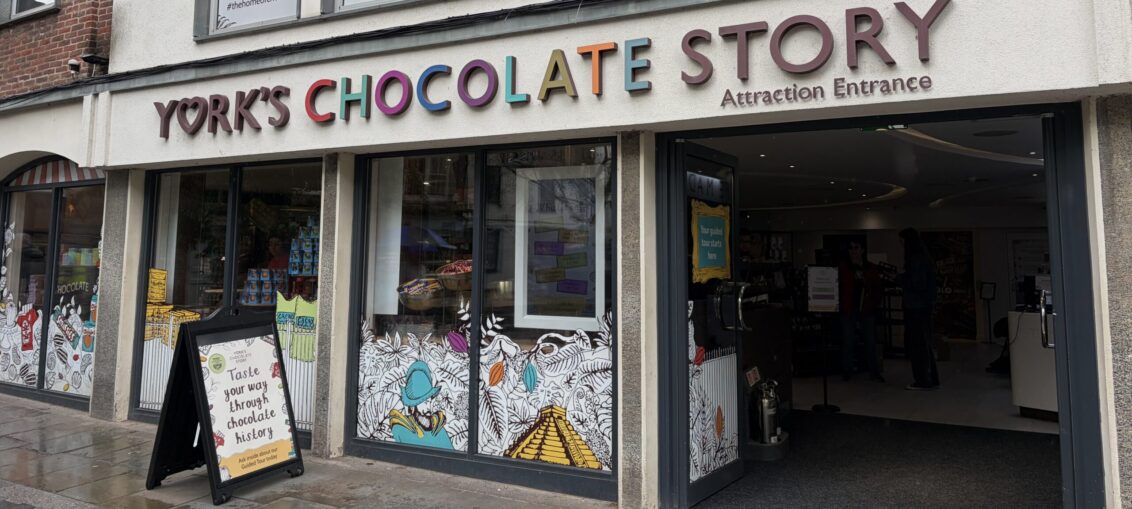
York’s reputation as ‘ Chocolate City’ did not arise for nostalgia or marketing, it was a product of a unique convergence of industrial innovation, social reform and a vision.
From the nineteenth century onwards, companies such as Rowntree’s, Terry’s and later Nestle transformed York into one of the nation’s most important centres of confectionery production.
Their factories shaped not only the city’s economic landscape but also its social fabric, influencing patterns of employment, urban development and community welfare.
Understanding how York became the sweet capital of Britain requires looking beyond the familiar brands on supermarket shelves.
It involves examining the Quaker business principles that guided the Rowntree and Terry families, looking into the rise of large scale manufacturing during the industrial revolution and the ways globalisation reshaped local industry in the late twentieth century.
York’s chocolate story begins with the Quakers. The success of Rowntree’s and Terry’s cannot be understood without recognising the distinctive role of the Quaker movement in shaping British business culture during the eighteenth and nineteenth centuries.
Quakers formally known as the Religious Society of Friends, developed a set of values, restrictions and community networks that unintentionally positioned them to excel in certain industries. Their religious convictions barred them from many professions but encouraged ethical entrepreneurship.
Rowntree’s and Terrys saw manufacturing as a way to improve society as well as earn a living. Joseph Rowntree and his son believed that business success carried a moral responsibility.
Their factory on Haxby Road became a model of progressive employment:
- Fair wages and shorter working hours.
- On site medical care.
- Education and training programmes.
- Recreational facilities and social clubs.
- The village of New Earswick, built to provide affordable housing.
This ethos and community shaped York’s reputation and helping define the city as a place where industry didn’t have to harden life but instead it could sit comfortably alongside compassion and dignity.
Terry’s, founded in 1767 and later based on the iconic Terry’s Chocolate Works, brought a different flavour to York’s identity. Known for elegance and craftmanship, Terry’s one of Britain’s most beloved confections, The Chocolate Orange.
Terry’s helped cement York’s image as a centre of quality and creativity. Its factory tower became a landmark, a symbol of the city’s sweet success.
Women were at the heart of production, York’s chocolate factories were major employers of women, especially during the world wars. Women gained economic independence, technical skills and social networks through factory work. Chocolate production became a gateway to broader social change.
Traditional manufacturing declined, therefore York reinvented itself. Chocolate became not just an industry but a story, one the city could tell to visitors and residents. York now embraces its chocolate past through:
- The York Chocolate Story attraction.
- Exhibitions.
- The annual York Chocolate Festival.
- Follow the Chocolate Trail.
York became the sweet capital of Britain not my accident but though a unique blend entrepreneurship, social conscience and industrial skill. Rowntree’s and Terry’s shaped the city’s economy, its social fabric and its global reputation.
