
On April 15th 2025, the UK Supreme Court ruled that a woman is defined by biological sex in the Equality Act 2010.
This comes after a unanimous decision by the Supreme Court that the term ‘woman’ means a biological woman and the term ‘sex’ means biological sex.
The question of how exactly ‘woman’ is defined by the Equality Act has been a long debate for many years with multiple different sides.
However, campaign group For Women Scotland argued that sex-based protections (such as women- only spaces) should only be accessed by those born female.
As a result, regardless of if someone has a gender recognition certificate (GRC) or identifies as another sex, they would be viewed as their sex assigned at birth.
What implications does this have?
The new clarification to the Equality Act directly impacts transgender people and transgender women in particular.
The ruling stated that, if a space is women–only, people assigned male at birth who have transitioned can be excluded from these spaces even with a GRC.
This means that transgender women do not get the same sex-based protections as those assigned female at birth.
However, when the ruling was given, Lord Hodge stressed that the law still gave protection against discrimination for transgender people.
Companies around the UK are having to review their sex-based rules and policies, such as single sex spaces.
Already there has been changes from the Equality and Human Rights Commission (EHRC), who say that in hospitals, restaurants, and shops that “trans women should not be permitted to use the women’s facilities”.
There has already been a domino effect from the ruling into other aspects of life, for example the Football Association announced that transgender women are no longer allowed to play women’s football.
What are people’s opinions on the ruling?
As expected, people are divided on the new ruling and what it means for trans people across the UK.
While some celebrated the ruling, others knew the implications of it and were sorrowful at the changes to come.
LGBTQ+ hotlines and charities are warning of a genuine crisis for people who are affected by the ruling, and allies of the trans community are doing what they can to fight it.
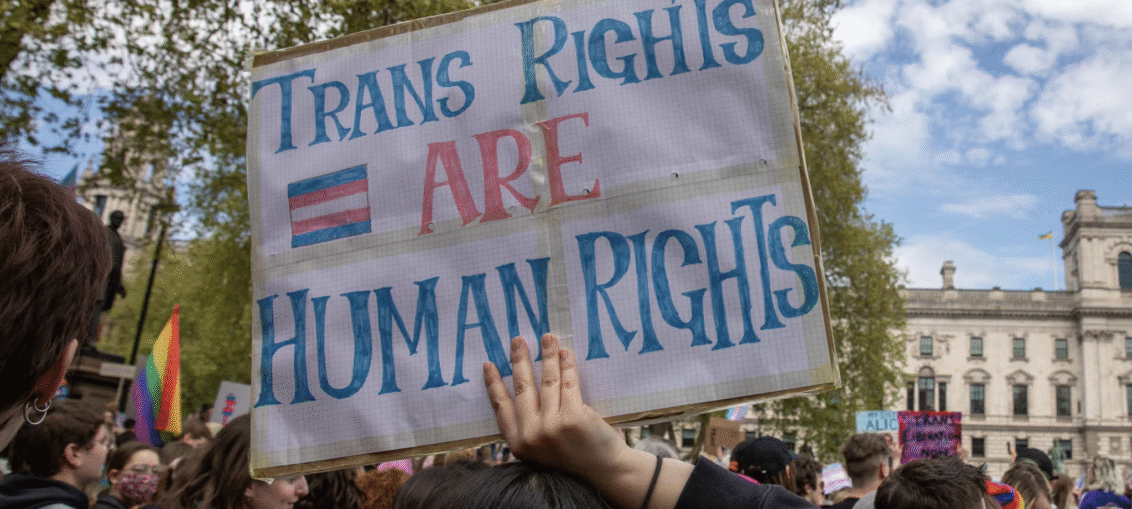
Already there have been protests and rallies across the UK in support of trans people and to show disagreement with the Supreme Court ruling.
Some of these rallies were in London, York, Brighton, and Edinburgh, with even more spread across the country.
With the ruling affecting so many, opposition was bound to happen.
The UK’s only ever transgender judge, Dr Victoria McCloud has said she is planning to take the government to the European Court of Human Rights (ECHR).
This is to appeal the ruling on the grounds of violating hers and so many others human rights.
The nonprofit organisation Good Law Project has raised over £350,000 to support a legal challenge against the ruling.
Similarly many people in the public eye have come together to dispute the judgement.
More than 400 actors and public figures have signed an open letter pledging solidarity with communities who have been affected.
Names like Nicola Coughlan, Bella Ramsey, Eddie Redmayne and Katie Leung are among those to have signed.
What does this mean for the future?
While the ruling itself is binding unless changed by the Supreme Court themselves, that doesn’t mean people should give up their beliefs.
The future for trans people is more uncertain than before, while the ruling has provided ‘clarity’ for some it is not the same for everyone.
There is still a lot to be decided for next steps for those in positions of power and LGBTQ+ people.
This debate is far from over for everybody involved and won’t be for some time.
Picture credit: James Willoughby/SOPA Images/Rex/Shutterstock
