

As I wait patiently to book tickets to see Furiosa: A Mad Max Saga, the prequel to George Miller’s post-apocalyptic Mad Max: Fury Road, I am left to wonder why so many movies that delve into the narratives of women continue to be, ironically, told by men?
Somehow, it feels wrong to see myself in these characters that have been forged through a male-lens, especially those that delve into intrinsically female experiences and issues.
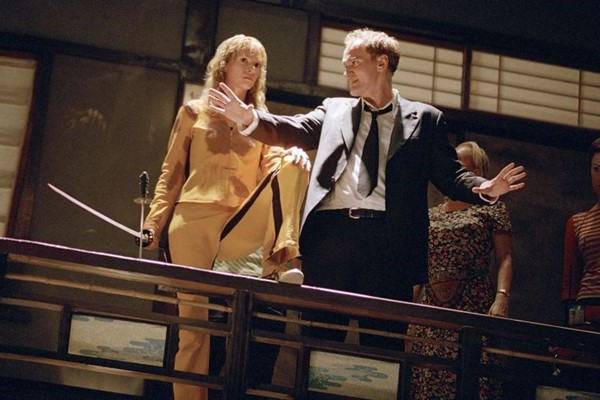
Now, that’s not to say that men are unable to capture glimpses into the multi-faceted sphere of the female perspective, or even create some fantastic heroines and female protagonists – such as Kill Bill’s The Bride, Everything Everywhere All at Once’s Evelyn and Joy, Poor Things’ Bella, or The Girl With The Dragon Tattoo‘s Lizbeth Salander.
Upon my first impression of the 2015 film Mad Max: Fury Road, my impressions were drastically changed. From what I originally thought was going to be two hours of monster-truck style cars, nonsensical chants of the War Boys, and a dystopian world governed by a tyrannical male-ruler, I was later entirely invested in Furiosa’s journey as she searched for the Green Place (the utopia from which she was captured).
I was sold. Her fierce determination and loyalty to protecting The Five Wives and bringing them out of captivity, for me, elevated her character to being equally as important, if not more, than Max (the protagonist).
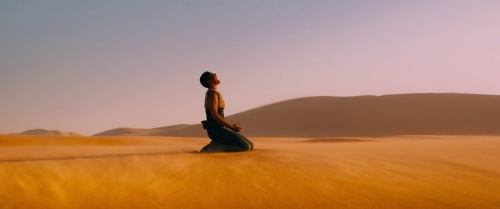
The stark contrast between the egalitarian matriarchy depicted in Green World (from the little we currently know of it), compared with the tyranny of The Citadel and its scarcity of even basic resources further calls to the film’s feminist undertones.
Although much of Mad Max: Fury Road focussed on the world post-nuclear fallout, the trailer for the new film, starring Anya Taylor-Joy as Furiosa suggests the origins of Green World will be explored in more depth.
In terms of cinematography, we can expect to see a similar style to the sequel- one that is instantly recognisable and unique, with its harsh contrasts of colour and features that resemble the genre of ‘Dieselpunk’.
So, who cares if Furiosa’s character wasn’t imagined by or brought to life by a woman?
Well, we must consider two things: Firstly, the lack of opportunity and representation of women in the Film and TV industry, and secondly, the covert-patriarchy in men reaping the rewards of telling women’s stories.
According to an article by the Guardian, a study has shown that “the number of female leads in Hollywood movies is at a 10-year low”. This comes as no surprise, even to the more casual film-watchers.
Additionally, streaming services were more likely to feature women’s stories than men’s in their original films. However, 77% of the original films had no female directors, according to a 2022 report.
It may sound quite sinister for me to suggest that there is always an ulterior motive or, as previously stated, a benefit for men in telling the stories of female characters.
I guess in a way it should sound at least a little shocking, however, it comes from a place of wanting to see more authenticity and value for the untold stories of women.
Circling back to Furiosa for a moment. Claiming her to be one of my favourite female protagonists, and what I guess some would call a fictitious “feminist icon”, would feel a little more permissible if I knew that the feelings and hope she represents had more female input.
And whilst in the last couple of years, we have seen more female-leads and input in film and TV, it seems to be a constant struggle for women, both on-screen and behind the camera, to prove themselves and gain recognition for their work.
For women to gain legitimate and deserved recognition for their contribution to the arts, the roots of the issue must be tackled. That is, the double-standard of men benefitting from women’s experiences.
On a lighter note, I am optimistic that Furiosa will stir a further demand for strong female protagonists and compelling stories.
Furiosa: A Mad Max Saga is set to be released to UK theatres on the 24th of May 2024.
